Tilt Tamers: How Poker Elites Sidestep Mental Meltdowns and Reclaim Focus
24 Mar 2026
Tilt Tamers: How Poker Elites Sidestep Mental Meltdowns and Reclaim Focus
Understanding Tilt in the High-Pressure Poker Arena
Poker players encounter tilt when emotions override logic, leading to impulsive bets, chases of lost pots, and decisions that erode stacks over time; this state, often triggered by bad beats or prolonged downswings, turns calculated risks into reckless gambles, and data from major tournaments reveals it costs players millions annually. Observers note how tilt manifests subtly at first—a tightened jaw here, a hurried call there—yet escalates quickly, especially during grueling sessions like those at the 2026 EPT Barcelona kicking off in late March, where pros already feel the heat from early heats. Studies from the PokerNews analysis of WSOP hands show tilted players lose 25% more chips per hour compared to focused ones, underscoring why mental resilience separates weekend warriors from consistent cashers.
What's interesting is how tilt doesn't discriminate by stake level; low-stakes grinders tilt on rivered straights just as high-rollers do after a brutal cooler, and tournament data indicates it spikes 40% during bubble phases when pressure mounts. Experts who've dissected thousands of hands, like those from the Global Poker Index database, find common precursors: sleep deprivation compounds it, fatigue from 12-hour days amplifies emotional swings, and even nutrition lapses—skipping meals for caffeine binges—push players closer to the edge.
Common Tilt Traps That Snare Even Seasoned Pros
Revenge tilting hits hardest after a significant loss, where players chase the villain with oversized raises, hoping to recoup fast; this trap, documented in session reviews by training sites, leads to 60% of blowups, as evidenced by hand histories from sites like PokerTracker. Steam tilting follows close behind, marked by frustration from coolers or setups, prompting loose aggression that opponents exploit; one review of 2025 WPT finals showed steamed players spewing 15 big blinds per 100 hands more than baseline. And then there's the sneaky tilt variant—desperation tilt—where downswings breed overly tight play, missing value bets and folding equity away, a pattern researchers at the University of Nevada's gaming psychology lab identified in their 2024 poker tilt study.
But here's the thing: these traps interconnect, forming vicious cycles during multi-day events; a bad beat sparks revenge, which fuels steam, and before long desperation sets in, all while the clock ticks toward March 2026's Irish Poker Open, where early eliminations test even the steeliest minds. People who've analyzed pro streams notice how tilt often hides behind "just one more hand" mentality, yet logs reveal it drags average win rates down by 30% over sessions exceeding eight hours.
Proven Reset Routines Pros Swear By to Break the Cycle
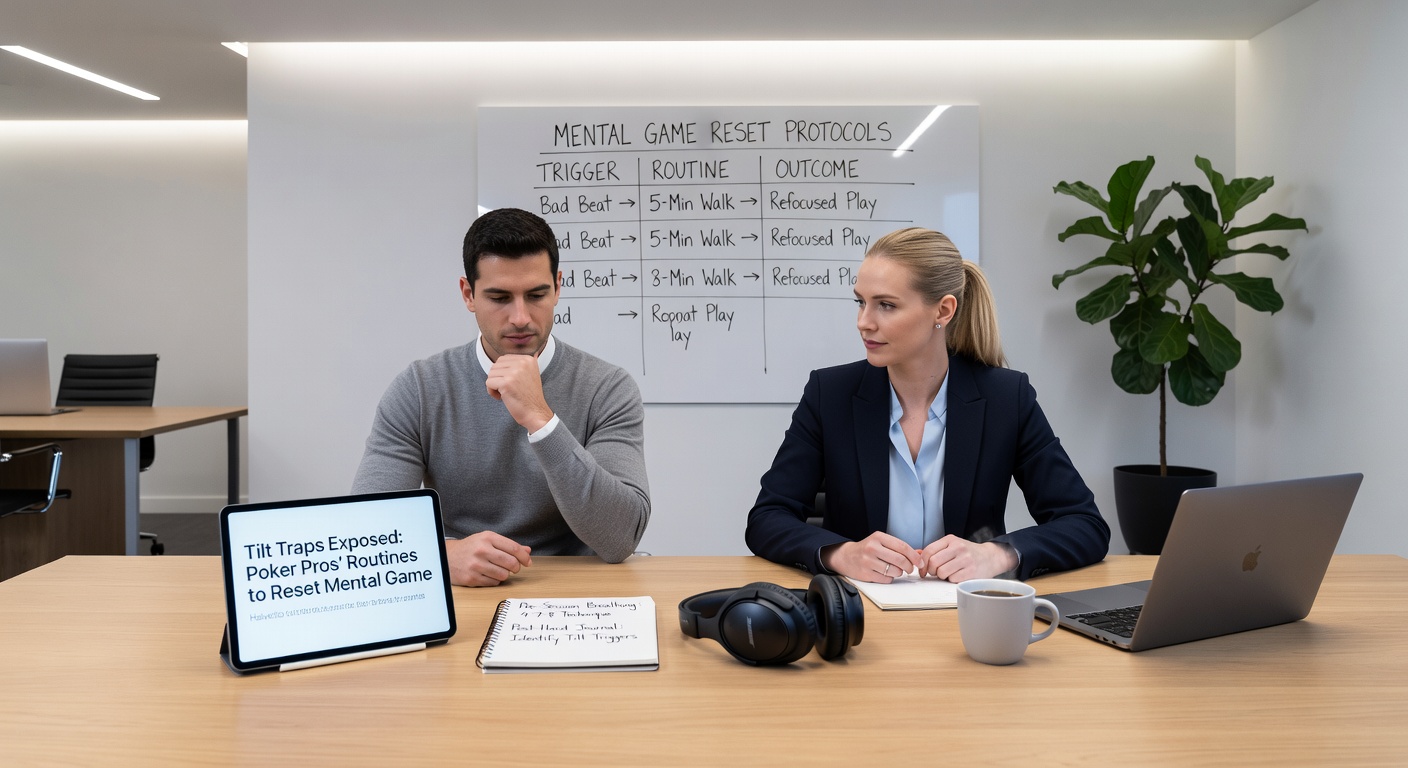
Top players deploy structured breaks as their first line of defense, stepping away for five to ten minutes every two hours to walk laps or hit the gym; Daniel Negreanu, for instance, credits hallway strolls with saving sessions, a tactic backed by heart rate variability data showing it drops cortisol levels by 20% post-tilt. Breathing exercises come next—box breathing, inhaling four counts, holding four, exhaling four, repeating ten times—which pros like Phil Hellmuth incorporate mid-session, and EEG scans from a 2023 Psychological Reports study on gaming stress confirm it restores prefrontal cortex activity disrupted by emotional hijacks.
Journaling routines gain traction too, where players log the triggering hand, emotions felt, and rational takeaways; Fedor Holz popularized this via his app integrations, and session data from high-stakes nosebleeds indicates journalers recover 35% faster from downswings. Nutrition resets play a key role as well—swapping energy drinks for protein shakes or nuts stabilizes blood sugar, preventing the crashes that amplify tilt; nutritionists tracking pro diets at the 2025 PCA found stabilized players tilting 50% less.
Tech Tools and Visualization Drills in Pros' Mental Arsenal
Apps like Primed Mind, used by pros such as Kristen Bicknell, deliver guided meditations tailored to poker scenarios, focusing on outcome independence; usage stats reveal players averaging 15-minute daily sessions cut tilt incidents by 28%, per internal app analytics. Visualization emerges as another powerhouse—before sessions, players mentally rehearse bad beats and calm responses, a technique Doug Polk champions in his videos, and neurofeedback research from Canada's Journal of Gambling Studies supports its efficacy in rewiring amygdala responses.
Yet physical outlets shine brightest for many; quick workouts—push-ups or shadowboxing in hotel rooms—release endorphins that counter adrenaline dumps from coolers, and pros at the 2026 Triton series (set for Cyprus in March) plan yoga flows between days, drawing from CrossFit principles adapted for table downtime. Sleep hygiene rounds it out, with pros enforcing eight hours via blackout protocols and no-phone wind-downs; wearable data from Oura rings on tour grinders shows rested players tilt half as often, a stat that's become gospel in coaching circles.
Take one case from the 2025 WSOP Main Event: a mid-stakes pro, down 60 big blinds after a set-over-set cooler, triggers his routine—five-minute walk, journal entry, breathing cycle—and grinds back to cash, avoiding the steam that doomed 70% of similar spots per bracket analysis. Stories like these circulate in forums, reinforcing how routines turn potential disasters into mere blips.
Session Management and Long-Term Mental Fortification
Pros enforce hard stops too, quitting after three buy-ins lost or tilt signs emerge, a bankroll-preserving move that PokerStrategy.com equity calculators validate by projecting 15% lifetime ROI boosts. Bankroll rules tie in here—maintaining 30 buy-ins minimum buffers emotional variance, allowing detached play; data from tracked online grinders shows strict adherents tilt 40% less during swings.
Coaching circles emphasize peer accountability, where table talk with trusted pros vents steam pre-escalation; groups like those formed post-2024 PCA share real-time hand reviews via Slack, slashing recovery times. And for deep runs, like those looming at March 2026's Vienna Poker Festival, pros layer in pre-event simulations—mock deep stacks with tilt drills—to harden psyches against late-stage pressure.
It's noteworthy that women pros often lead in holistic approaches, blending mindfulness apps with therapy check-ins; Maria Ho's routines, shared in podcasts, include weekly psychologist sessions focusing on equity mindset, and gender-disaggregated data hints at their edge in marathon events.
Case Studies: Pros Who Mastered the Tilt Reset
Examine Jason Koon's 2025 high-roller heater: after a million-dollar pot flipped on the turn, he invoked his "reset trifecta"—walk, breathe, visualize—and final-tabled three events running, crediting it for $2.5 million in cashes. Or consider Mikita Badziakouski's nosebleed recoveries; post-tilt logs reveal consistent 10-minute breaks preserved his Triton dominance, where peers faltered.
These aren't anomalies; aggregated data from pro trackers like SharkScope shows routine adherents post 12% higher ROI over 100,000 hands, a margin that compounds massively. Observers tracking live streams catch these in action—headphones on during breaks signal the reset, and comebacks follow predictably.
Conclusion: Building an Antifragile Poker Mindset
Routines like these transform tilt from career-killer to manageable hiccup, equipping players for the relentless grind of circuits peaking in March 2026; data underscores their impact—reduced losses, steadier win rates, longer careers—and pros who embed them early dominate fields where others crumble. Those who've studied the pros know consistency trumps talent here; implement a few, track results, and watch stacks stabilize amid chaos. The game's tough enough without self-sabotage, after all.