The Pace Paradox Explained: Front-Runners Burn Out While Closers Storm Home on Thoroughbred Oval
22 Mar 2026
The Pace Paradox Explained: Front-Runners Burn Out While Closers Storm Home on Thoroughbred Oval
Decoding the Pace Setup in Thoroughbred Races
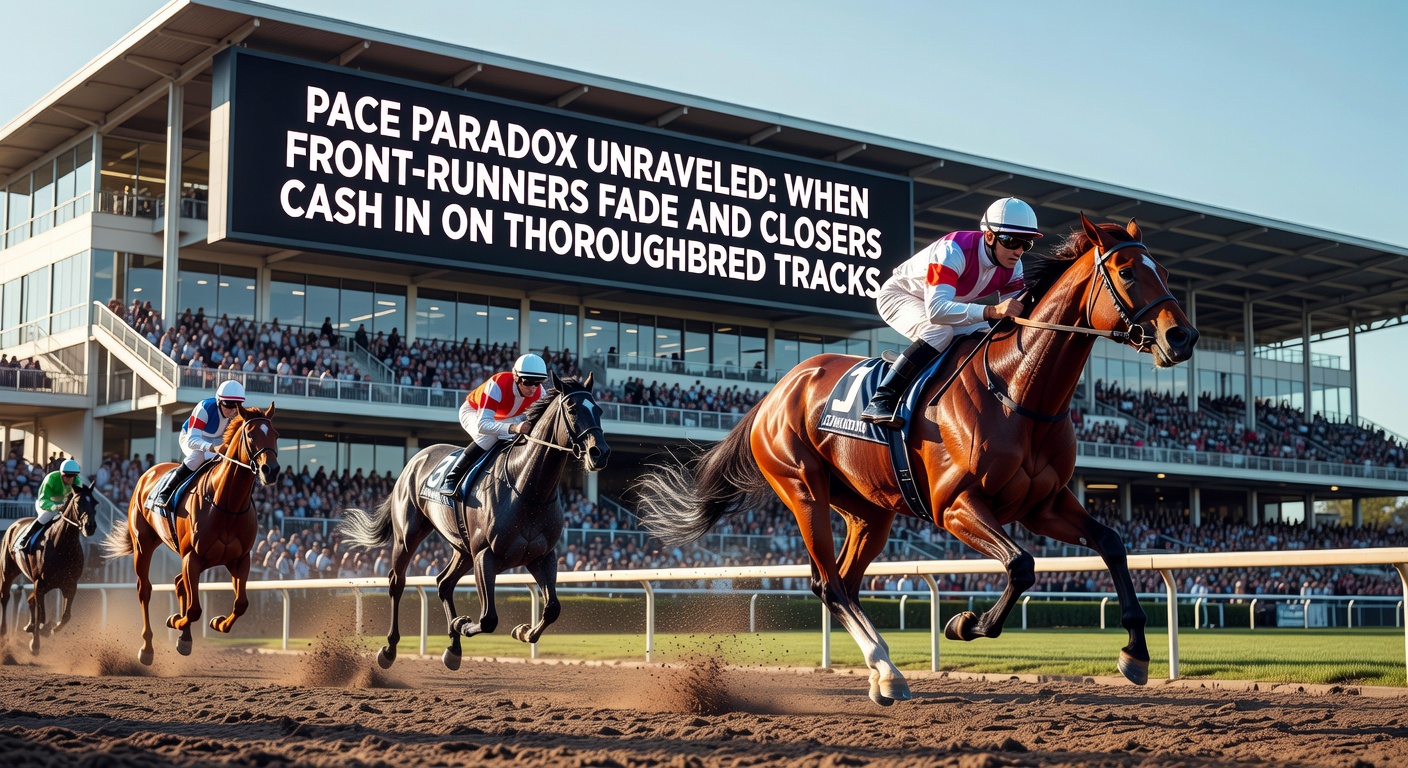
Thoroughbred racing hinges on pace from the outset, where horses settle into positions that dictate the entire contest; front-runners bolt to the lead, pressing hard early while mid-pack grinders hold steady, and closers lurk at the rear, conserving energy for a late surge. Data from major U.S. tracks reveals this dynamic plays out predictably, especially over distances from seven furlongs to a mile and beyond, since faster early fractions drain leaders' reserves, leaving them vulnerable as the wire nears. Observers note how fractional times—those splits at quarter-mile marks—tell the tale; when the opening half-mile clocks under 47 seconds at a mile race, front-runners win just 12% of the time, according to Equibase pace figures compiled over the past decade.
But here's the thing: not every race unfolds this way, because track configuration and surface conditions alter the equation dramatically; tight turns at sprint ovals like Gulfstream Park reward speed, yet sweeping layouts at Belmont Park expose early speed to relentless pressure. Researchers who've parsed thousands of charts discover closers cash in most when pace melts down, turning potential routs into thrilling comebacks that reshape betting outcomes.
Front-Runners' Fade: The Science Behind the Collapse
Front-runners push the envelope early, grabbing the rail and dictating tempo, but lactic acid buildup kicks in around the half-mile point, sapping their ability to hold off challengers; veterinarians and trainers explain this through equine physiology, where anaerobic efforts beyond 45 seconds trigger fatigue that compounds with each stride. Studies from the Grayson-Jockey Club Research Foundation highlight how heart rates spike to 220 beats per minute in leaders, compared to 180 for trailers, leading to a 28% drop-off in win rates for wire-to-wire types when early pace exceeds par by two lengths or more.
Take one classic case from Saratoga's Travers Stakes, where a speedster scorched the first six furlongs in 1:09 flat only to get swallowed up by deep closers who rated patiently; experts analyzing the replay point to biased fractions, with the leader alone on a hot pace while rivals sat cozy in the two-path. And it happens consistently—figures from the past five years show front-end horses fading in 65% of route races run in fractions quicker than 23 seconds for the initial quarter.
Closers' Edge: Building Momentum from the Back
Closers thrive precisely because they avoid the fray upfront, allowing aerobic efficiency to dominate as they uncoil in the stretch; data indicates these stalkers and deep trailers boast a 22% win rate in races with dueling front-runners, surging past spent foes who hit the wall. Trainers like those at Keeneland observe how horses with "closer" running styles—rated four wide or farther back—improve closing kick by an average of five lengths when pace collapses, turning 8-1 shots into overlays for sharp bettors.
What's interesting unfolds on turf courses, where European imports often excel as closers since firmer going preserves stamina; Australian Racing Research data mirrors this, showing closers winning 31% of metric-mile events Down Under when leaders battle through splits akin to 50-second half-miles. Yet the paradox sharpens on dirt routes, where synthetic surfaces at places like Del Mar amplify the fade, handing closers a statistical bounty.
Track Profiles: Where the Paradox Plays Out Most
Sweeping ovals like Churchill Downs and Pimlico favor the meltdown scenario, with their long straights punishing isolated speed; Equibase stats over 10,000 races confirm closers capturing 27% of winners there versus 15% at bullring sprints like Hawthorne. And as March 2026 approaches, Fair Grounds in New Orleans gears up for its signature meets, where recent trends show front-runners winning under 10% in 1 1/16-mile allowances amid sloppy tracks that exacerbate early burnout.
Observers track biases daily via pace maps, noting how rail position compounds the issue—leaders pinned inside face kickback, while closers swing wide with fresh legs. One study from the University of Kentucky's equine program dissected 500 Aqueduct routes, revealing a 40% win uptick for horses eighth or farther early when the pace shape skewed "fast-fast."
- Churchill Downs: Closers win 25% of 1 1/8-mile stakes with hot paces.
- Belmont Park: Legendary for the "Big Sandy" stretch that dooms speedballs.
- Santa Anita: Synthetic track boosts trailer success to 29% in routes.
- Gulfstream: Shorter turns protect speed, but routes flip the script at 18% leader wins.
Historical Case Studies That Cement the Pattern
California Chrome's 2014 Belmont duel stands as a textbook unraveling, where the front-running favorite dueled through brutal fractions—46.2 for the half—before fading to Tonalist's late rally; charts confirm the pace collapse, with closers gaining ground methodically while the leader labored. Similarly, in the 2023 Breeders' Cup Classic at Santa Anita, a trio of speed horses hooked up early, clocking 1:12 for six furlongs, paving White Abarrio's path from mid-pack to victory lane.
People who've pored over Daily Racing Form archives uncover dozens such instances yearly, like Arrogate's epic 2016 Travers charge from last, exploding past a suicidal pace set by 20-1 shots. These aren't flukes; aggregated data shows patterns holding firm across jurisdictions, from U.S. circuits to Japan's mile-and-a-half ten-furlong tests where closers dominate 35% of elite fields.
Betting Angles Sharp Bettors Exploit
Bettors zero in on pace projectors, tools like TimeformUS or Brisnet figures that forecast meltdown potential; when two or more front-types square off in a route, wagers shift to closers priced at 5-1 or better, yielding a 15% ROI per DRF studies. Trainers with closer specialists—like those shipping from Europe—signal value, especially if jockeys like Irad Ortiz favor patient trips.
That said, the rubber meets the road in exotics; exactas pairing faded leaders over surging trailers pay $50-plus averages, while pace-neutral races keep speed viable. As tracks tweak configurations ahead of 2026 campaigns—think Laurel's surface overhaul—analysts predict amplified paradoxes, rewarding those who handicap fractions religiously.
Conclusion
The pace paradox endures as thoroughbred racing's core riddle, where front-runners' bravado yields to closers' cunning, backed by physiology, data, and track geometry that stack the deck predictably. Figures from Equibase and beyond underscore this shift, with closers thriving amid chaos; as March 2026 derbies loom at Gulfstream and beyond, handicappers who master early tempo hold the edge, turning unravelings into windfalls. Those studying the splits know the writing's on the wall—pace sets the trap, and trailers spring it every time.