22 Jul 2026
Meteorological Integration Techniques for Enhanced Thoroughbred Racing Forecasts
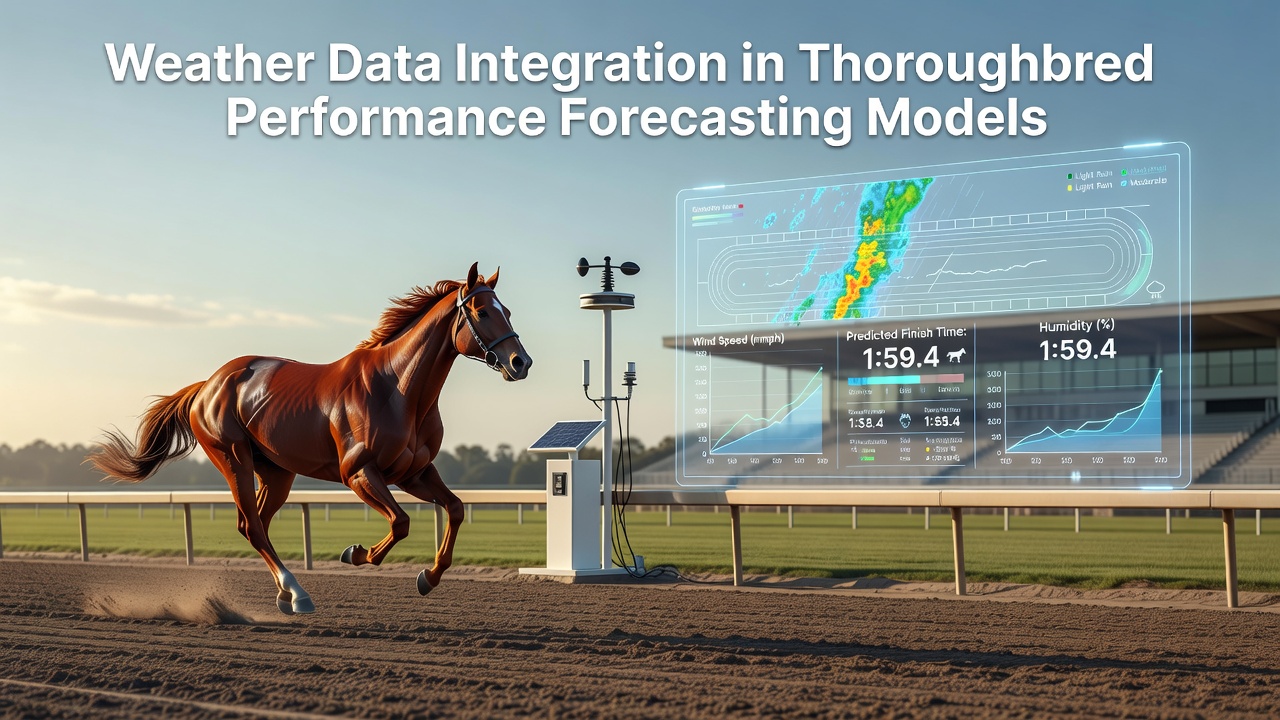
Thoroughbred performance forecasting models have incorporated meteorological datasets for decades, yet the depth of integration continues to expand as computing power and sensor networks improve, and researchers track how variables such as temperature, humidity, precipitation, wind speed, and barometric pressure correlate with race outcomes across different tracks and distances.
Data Sources and Collection Methods
Forecasting teams draw from national weather services that supply granular observations at hourly or sub-hourly intervals, while on-site stations at major racetracks record track-specific microclimates that national grids sometimes miss, and satellite-derived products fill gaps in remote locations where ground sensors remain sparse. Studies conducted by the Australian Bureau of Meteorology in partnership with regional racing authorities demonstrate that combining surface observations with radar-derived rainfall totals produces more accurate moisture estimates for turf surfaces than either source alone, and similar approaches appear in North American operations that access National Weather Service archives.
Model Architecture and Variable Weighting
Modern algorithms treat weather inputs as dynamic covariates rather than static adjustments, and machine-learning frameworks such as gradient-boosted trees or neural networks learn non-linear interactions between air temperature and equine stride efficiency, whereas earlier linear regressions applied fixed penalties for each degree above or below an optimal range. Precipitation data enters models both as cumulative rainfall in the preceding 24 to 48 hours and as instantaneous intensity during race day, because standing water affects footing differently than recently soaked ground that has begun to drain, and wind vectors receive separate treatment for headwinds, tailwinds, and crosswinds since each alters energy expenditure in distinct ways.

Regional Variations and Seasonal Patterns
Tracks in temperate zones exhibit stronger correlations between dew-point spread and late-race fatigue than arid venues, where low humidity rarely limits performance, yet desert circuits show pronounced effects from sudden temperature drops after sunset that alter recovery times between heats, and researchers at Canadian institutions have documented how frozen or partially thawed surfaces during early spring meets introduce additional variance that standard temperature variables alone cannot capture. By July 2026 several North American and European circuits had begun publishing standardized weather-adjusted speed figures that allow direct comparison of performances across disparate conditions, and these public datasets accelerate model refinement because independent analysts can test new variable combinations against verified results.
Challenges in Real-Time Application
Latency between weather observation and model update remains a constraint during rapidly changing conditions, and forecasters must decide whether to rely on nowcasts that blend radar trends with numerical weather prediction output or to wait for confirmed station readings that arrive minutes later, while track-maintenance crews simultaneously alter surfaces through harrowing or watering, which introduces human decisions that weather data alone cannot anticipate. Data quality issues surface when sensors malfunction or when official observations come from airports several kilometers away, forcing modelers to apply spatial interpolation techniques that carry their own uncertainty estimates.
Validation and Performance Metrics
Validation protocols compare forecast accuracy before and after weather integration by measuring metrics such as mean absolute error in predicted finishing times or the improvement in log-likelihood of correctly ranking finish order, and peer-reviewed work appearing in journals focused on animal science and sports analytics consistently reports statistically significant gains once meteorological covariates enter the feature set, although the magnitude of improvement varies by track surface and race distance. Out-of-sample testing across multiple seasons guards against overfitting to particular weather regimes that may not recur, and cross-validation schemes that respect temporal ordering prevent leakage from future races into training data.
Conclusion
Continued refinement of meteorological inputs, combined with denser sensor networks and higher-resolution forecast models, supports incremental advances in thoroughbred performance forecasting, and organizations that maintain transparent methodologies for weighting weather variables contribute to industry-wide benchmarks that benefit both model developers and racing participants seeking evidence-based decision frameworks.