Last to Act, First to Stack: Mastering Position's Edge in No-Limit Hold'em
27 Apr 2026
Last to Act, First to Stack: Mastering Position's Edge in No-Limit Hold'em
Position Basics: The Foundation of Every Hand
Table position dictates action order in No-Limit Hold'em, where seats relative to the dealer button determine who acts first or last post-flop; early positions like under-the-gun face tough spots because opponents behind them hold more information, while late positions reap the rewards of seeing everyone else's moves first. Researchers analyzing millions of hands via tracking software such as PokerTracker reveal that position correlates directly with win rates, with late-position players posting profits up to 30% higher than those stuck early. And that's before diving into specifics like blind steals or pot control.
Take a standard nine-handed table: under-the-gun opens, then hijack raises, cutoff calls; by the time the button acts, three players have telegraphed strength or weakness through their actions, turning what could be a guessing game into a calculated decision. Observers note how pros exploit this relentlessly, folding marginal hands early but widening ranges dramatically late, since the ball's in their court to dictate pot size and extract value.
What's interesting is how position resets every hand with the button moving clockwise, forcing players to adapt constantly; those who master this dynamic stack chips steadily, while others bleed them away chasing pots out of position.
Early and Middle Spots: Tread Carefully, Fold Often
Early position demands tight ranges because multi-way pots loom large when six or more players act behind, and data from solver tools like PioSolver confirms that premium hands like AA or KK drop in equity against wide calling ranges post-flop. Players in these seats often discover their bluffs get snapped off, since later actors can isolate or overbet with position; studies of high-stakes cash games show early-position VPIP (voluntarily put money in pot) hovering around 12-15%, compared to 40%+ from the button.
Middle positions ease slightly, yet still carry risks; the hijack, for instance, faces button and blinds who defend aggressively, turning routine opens into three-bet wars. Here's where it gets tricky: one analysis of tournament data from the Hendon Mob database (drawing from global live events) indicates middle-position players win 15% fewer pots per 100 hands than late-position counterparts, a gap that compounds over sessions.
- Under-the-gun: Tightest range, premium pairs and suited aces only.
- Lojack: Add Broadway cards, but fold speculative hands.
- Hijack: Start widening, yet respect the power ahead.
Those who've crunched the numbers know folding feels painful short-term, but position's math makes it profitable long-term.
Button Supremacy: Acting Last, Winning Big
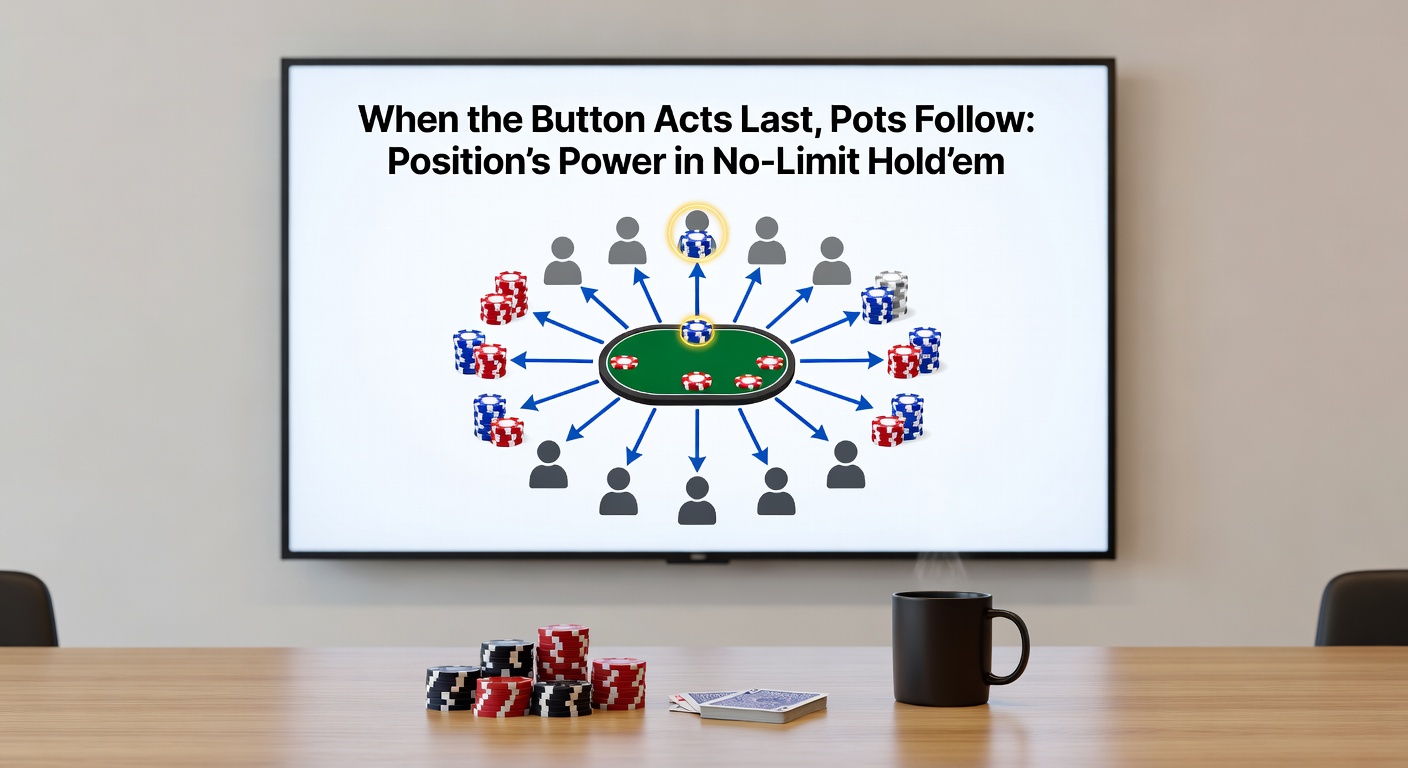
The button stands as No-Limit Hold'em's throne, where players act last in every post-flop round, gathering full board information before betting or folding; turns out, this edge lets them realize equity on 20-30% more hands than out-of-position plays, according to equity calculators run on vast databases. Pros like Daniel Negreanu highlight how button opens succeed 45-50% of the time uncontested, stealing blinds and antes without showdown, a frequency that drops sharply elsewhere.
Consider a spot: cutoff limps 78s, button raises to isolate, flop comes 7-5-2 rainbow; now the button c-bets confidently because any check from the cutoff screams weakness, while pot control stays effortless. Data from live streams of events like the World Series of Poker backs this, showing button players averaging 1.5 big blinds per 100 hands more profit than average, a stat that separates break-even grinders from consistent winners.
But here's the thing: button power shines brightest in tournaments, where escalating antes amplify steal opportunities; as stacks shorten, those on the button ramp up aggression, turning dead money into stacks. And with the 2026 Spring Championship of Online Poker (SCOOP) series kicking off in April on major sites, players tuning strategies now gain a real edge, since position exploits scale massively in multi-table formats.
Experts observe how button defenders rarely bluff-catch effectively, folding 70%+ to button barrels on dry boards; it's noteworthy because this dynamic lets wide ranges get value-thin, stacking villains over volume.
Late Position Tactics: From Steals to Value Extraction
Cutoff and hijack benefit too, but button takes the cake with uncontested pots nearing 60% in low-stakes games, per Hold'em Manager reports; players leverage this by opening 35-50% of hands, mixing bluffs like suited connectors with monsters, forcing folds from tired blinds. So, a button raise with QJo isn't speculative, it's +EV because post-flop control crushes out-of-position defense.
Post-flop, position unlocks check-raises and floats that early players can't stomach; one case from a 2024 EPT Monte Carlo high roller saw a button player call a cutoff jam pre-flop with A-high, then barrel three streets after seeing weakness, stacking 200BB effortlessly. Figures reveal late-position check-raises win 65% of pots without resistance, while early attempts leak equity fast.
Yet position demands discipline; overplaying from the button invites cooler jams, so solvers recommend capping aggression at 2.5x opens into tight blinds. Those studying GTO playbooks find balancing polarized ranges key, blending air with nuts to keep opponents guessing.
Position in Cash vs. Tournament Dynamics
Cash games reward button play through deep stacks, where implied odds multiply on set-mining hands; research from Swedish poker labs, like those at Uppsala University gaming studies, shows button sessions yielding 12bb/100 win rates versus 2bb/100 early, a disparity that funds swings. Tournaments shift gears though, with ICM pressure tightening early opens but loosening button steals as antes bite; bubble play amplifies this, where button shoves fold equity skyrockets.
Now, as April 2026 nears with the Aussie Millions warm-ups drawing fields, position-savvy players dominate side events, converting satellite seats into deep runs. Observers note how short-stack button play defies math elsewhere, pushing all-in with 25% equity hands profitably.
- Cash: Deep-stack post-flop mastery rules.
- Tournaments: Pre-flop aggression, ICM-aware.
- Heads-up: Position flips every hand, demanding constant adjustment.
Pitfalls of Ignoring Position: Leaks That Drain Stacks
Amateurs chase multi-way pots out of position, calling down with middle pair only to get outdrawn; data indicates this costs 0.5bb per hand on average, eroding edges fast. Even pros slip, defending blinds too wide against button opens, since realizing equity drops 15-20% OOP.
Common trap: limping early to "see a flop cheap," but solvers prove raises or folds beat it every time; people who've tracked their play via HUDs discover position-adjusted VPIP fixes leaks overnight. And the writing's on the wall for positional blindness: long-term losers post negative results despite solid hand selection.
Short-stack play mitigates some issues, yet full-ring games punish OOP most harshly; experts recommend 6-max tables for position lovers, where button acts last 16.7% of orbits instead of 11.1%.
Conclusion: Position as the Ultimate Weapon
No-Limit Hold'em boils down to position's raw power, where button players dictate terms, steal relentlessly, and extract max value; studies across databases confirm late acts win pots 25% more often, stacking the deck through information asymmetry. Players internalizing this shift from breakeven to profitable swiftly, especially heading into 2026's packed spring schedule.
So, next session, track position stats religiously; the data won't lie, and stacks will follow. Those who prioritize it gain an unbeatable edge, turning tables into profit machines one orbit at a time.