11 Jul 2026
Actuarial Integration for Long-Term Viability in Multi-Sport and Casino Wagering Portfolios

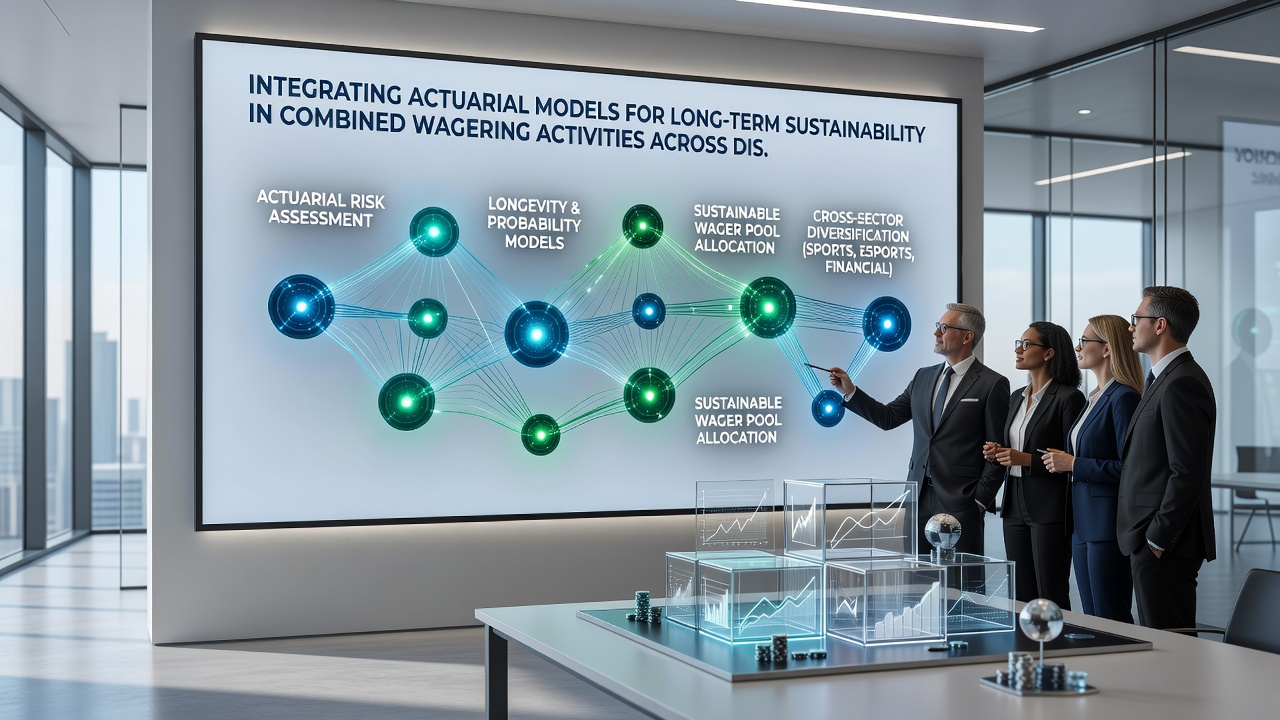
Actuarial models apply statistical techniques and probability theory to assess risk and forecast outcomes, and their integration into wagering operations now spans sports betting, horse racing, and casino gaming. Operators combine these models to create unified frameworks that balance exposure across disciplines rather than treating each market in isolation. This approach draws on historical performance data, volatility measures, and correlation analysis to project long-term portfolio behavior under varying conditions.
Core Components of Cross-Discipline Actuarial Application
Researchers at institutions such as the University of Nevada, Reno have documented how actuaries adapt life-contingency tables and stochastic processes originally developed for insurance to wagering scenarios. These adaptations incorporate elements like player behavior patterns, event frequency distributions, and liquidity constraints that differ markedly between fixed-odds sports markets and random-number casino games. Models frequently employ Monte Carlo simulations to stress-test combined portfolios against sequences of adverse results that may occur simultaneously across multiple verticals.
Data aggregation forms the foundation. Wagering operators compile transaction-level records from disparate systems, then normalize them into consistent formats that allow direct comparison of risk metrics. Actuaries calculate value-at-risk figures and expected shortfall measures that account for both independent and dependent loss events, enabling allocation decisions that respect overall capital limits rather than individual product caps.
Implementation Patterns Observed in 2025-2026
By July 2026 several North American and European operators had deployed integrated platforms that feed real-time odds and settlement data into centralized actuarial engines. These systems recalibrate reserve requirements daily, shifting capital between sports books and casino floors according to updated correlation coefficients. One documented case involved a multi-state operator that reduced aggregate reserve holdings by 14 percent while maintaining the same regulatory capital ratio after introducing cross-product hedging parameters.
Regulatory bodies outside the United Kingdom provide additional context. The Nevada Gaming Control Board publishes monthly reports that track reserve adequacy across licensed properties, and analysts have noted increasing references to multi-product risk models in those filings. Australian state regulators similarly require operators to demonstrate portfolio-level stress testing in license renewal applications, prompting further adoption of actuarial techniques.
Sustainability Outcomes and Measurement
Long-term sustainability metrics focus on drawdown frequency, recovery time, and earnings volatility rather than short-term profit spikes. Operators using integrated actuarial frameworks report narrower ranges between best-case and worst-case quarterly results, according to aggregated industry data compiled by the American Gaming Association. These narrower ranges translate into steadier cash flows that support ongoing technology investment and regulatory compliance expenditures.
Correlation monitoring plays a central role. When models detect rising positive correlation between, for example, live sports betting losses and slot machine payout clusters during major sporting events, operators adjust marketing spend or promotional parameters to dampen simultaneous exposure. Such adjustments occur within predefined tolerance bands established by actuarial review committees.
Technical and Organizational Considerations
Successful integration requires both technical infrastructure and organizational alignment. Data pipelines must handle high-velocity feeds from multiple sources without introducing material latency, while actuarial teams work alongside product managers to translate model outputs into actionable limits and pricing rules. Training programs now include modules on stochastic modeling for non-actuarial staff to ensure consistent interpretation of risk signals across departments.
Challenges persist around data quality and model validation. Incomplete records from legacy casino management systems can distort correlation estimates, and regulators increasingly request independent audits of the underlying assumptions. External consultants often perform back-testing against multi-year outcome histories to confirm that projected loss distributions align with realized results.
Conclusion
Actuarial integration across wagering disciplines continues to evolve as operators refine data collection methods and validation protocols. The frameworks established by mid-2026 demonstrate measurable reductions in portfolio volatility while satisfying diverse regulatory requirements from North American and Australian authorities. Continued refinement of these models depends on sustained investment in data infrastructure and cross-functional expertise.